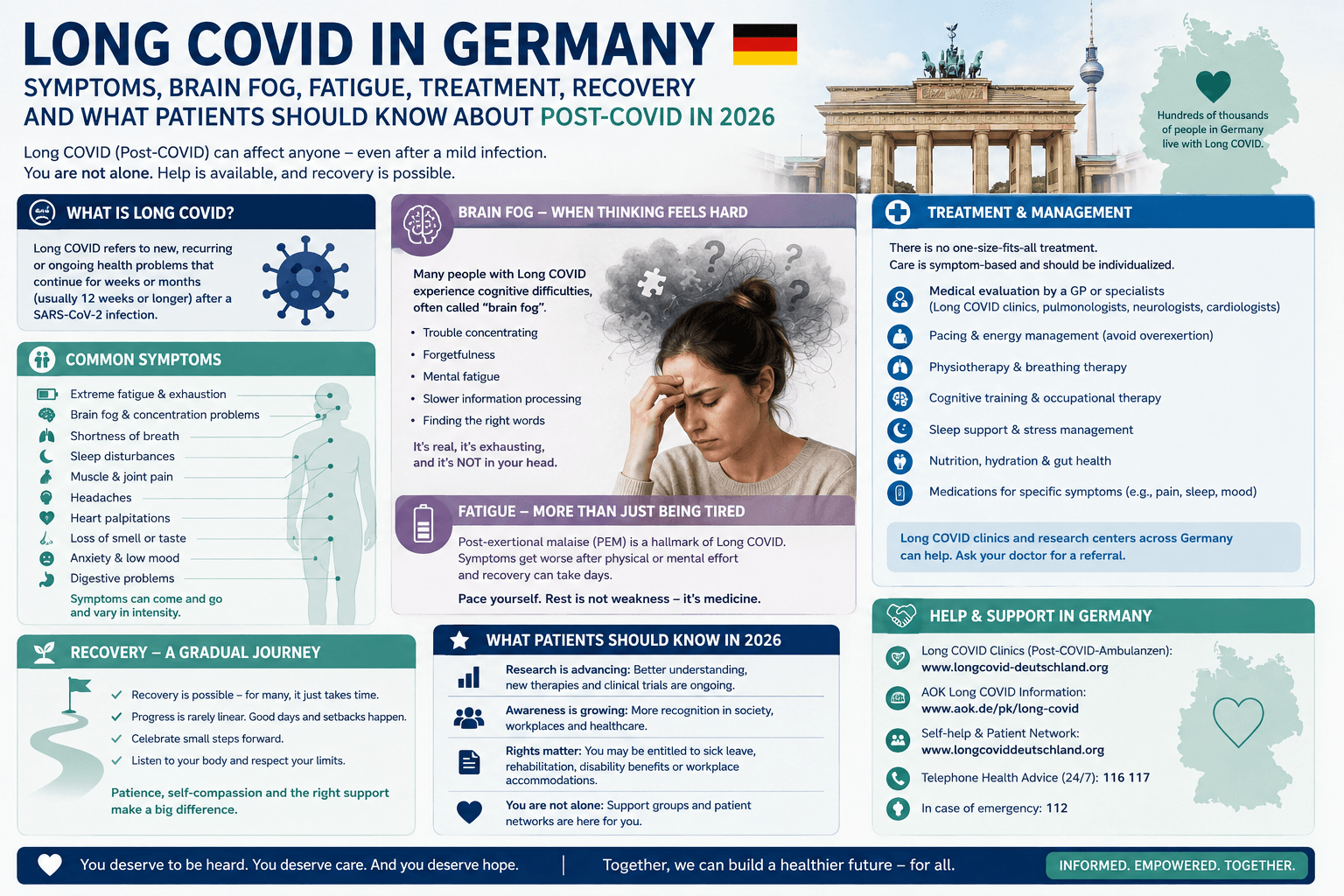
Long COVID can affect much more than your energy levels. Some people experience persistent tiredness after COVID-19, while others develop problems with concentration, breathing, sleep, digestion, pain or exercise tolerance.
The difficult part is that Long COVID does not look the same in everyone.
A person may feel almost completely recovered after the initial infection and then notice symptoms weeks or months later. Others may experience symptoms continuously from the original infection, with periods of improvement followed by flare-ups.
According to the World Health Organization (WHO), post-COVID-19 condition can involve more than 200 reported symptoms and may affect a person’s ability to work, study, exercise and participate in everyday activities.
This guide explains 20 commonly reported Long COVID symptoms, what they can feel like, when medical evaluation may be appropriate, and why symptoms can fluctuate.
Medical disclaimer: This article is for educational purposes only. It does not diagnose Long COVID or replace advice from a qualified healthcare professional.
What Is Long COVID?
Long COVID, also known as Post-COVID-19 condition or Post-COVID-Syndrom, refers to longer-term health problems following a SARS-CoV-2 infection.
Symptoms can continue from the initial illness or appear after a period in which someone seems to have recovered.
There is no single Long COVID symptom that proves someone has the condition.
Instead, healthcare professionals consider the overall pattern, duration and impact of symptoms while also checking whether another medical condition could explain them.
For readers in Germany, our detailed guide covers the condition from a Germany-specific perspective:
👉 Long COVID in Germany: Symptoms, Treatment & Recovery Guide 2026
20 Common Long COVID Symptoms
Long COVID can affect several systems of the body. Here are 20 symptoms frequently reported in people with post-COVID-19 condition.
1. Persistent Fatigue
Fatigue is one of the symptoms most commonly associated with Long COVID.
This is often more than ordinary tiredness after a busy day.
Someone may sleep for a normal amount of time but still wake up feeling exhausted. Simple activities such as shopping, working at a computer or preparing food can sometimes require significantly more effort than before.
Fatigue can also fluctuate.
A person may have a relatively good day followed by a major reduction in energy after physical or mental activity.
2. Brain Fog
“Brain fog” is commonly used to describe cognitive difficulties following COVID-19.
People may experience:
- Difficulty concentrating
- Forgetfulness
- Slower thinking
- Difficulty finding words
- Problems multitasking
- Trouble following conversations
- Mental exhaustion
For someone working or studying, brain fog can be particularly disruptive.
A task that previously required 30 minutes may suddenly require much more concentration and frequent breaks.
3. Shortness of Breath
Some people experience breathlessness after COVID-19.
It may happen during exercise, climbing stairs or walking quickly. In some cases, people report feeling short of breath even during relatively light activity.
Persistent breathing problems should not automatically be attributed to Long COVID.
Other respiratory, cardiovascular and medical conditions can cause similar symptoms, so professional assessment may be important.
4. Reduced Exercise Tolerance
A person who previously exercised regularly may suddenly find that their physical capacity has changed.
Activities such as:
- Running
- Cycling
- Gym workouts
- Long walks
- Climbing stairs
may become significantly more difficult.
This is sometimes described as exercise intolerance or reduced physical capacity.
The important point is that exercise response can vary considerably between people with Long COVID.
5. Post-Exertional Malaise
Post-exertional malaise, or PEM, is particularly important.
PEM refers to a worsening of symptoms after physical, cognitive or emotional exertion.
The reaction may not always happen immediately.
For example, someone may spend several hours cleaning their home and initially feel fine. Later that day or the following day, they may experience significantly worse fatigue, brain fog, dizziness or other symptoms.
This is one reason why simply telling every person with Long COVID to “exercise more” is not appropriate.
Activity should be individualized, particularly when PEM is suspected.
6. Sleep Problems
Long COVID can be associated with changes in sleep.
Some people report:
- Difficulty falling asleep
- Frequent waking
- Unrefreshing sleep
- Excessive sleepiness
- Changes in sleep patterns
Sleep is also closely connected with fatigue and cognitive performance.
If you’re interested in the broader relationship between sleep and daily health, see our guide on 5 Hours vs. 8 Hours of Sleep: Benefits, Risks & Why Quality Sleep Matters.
7. Headaches
Persistent or recurring headaches can occur after COVID-19.
The pattern can vary significantly between individuals.
Someone who rarely experienced headaches before COVID may notice a new pattern afterward.
However, recurring headaches have many possible causes, so persistent or severe headaches deserve appropriate medical evaluation.
8. Muscle Pain
Some people experience muscle aches or widespread body discomfort after COVID-19.
The pain can make normal physical activities more difficult and may occur alongside fatigue or reduced exercise tolerance.
Persistent unexplained muscle pain should not automatically be assumed to be Long COVID.
9. Joint Pain
Joint discomfort is another symptom reported after COVID-19.
It may affect one or several joints and can fluctuate over time.
If joint pain is severe, persistent or associated with swelling, fever or other concerning symptoms, medical assessment is appropriate.
10. Dizziness
Dizziness can take different forms.
Someone might feel:
- Light-headed
- Unsteady
- As if the room is moving
- Weak after standing
- Less stable while walking
Dizziness can have numerous causes, including dehydration, medication effects, blood-pressure changes and other medical conditions.
For this reason, persistent dizziness requires proper assessment rather than self-diagnosis.
11. Heart Palpitations
Some people report feeling their heart:
- Beat unusually fast
- Pound strongly
- Flutter
- Skip beats
These sensations are commonly described as palpitations.
Palpitations can have many causes, including stress, caffeine, medications and cardiovascular problems.
If they are persistent, severe or accompanied by chest pain, fainting or significant breathing difficulty, urgent medical evaluation may be necessary.
12. Chest Discomfort
Chest discomfort has also been reported among people experiencing post-COVID symptoms.
However, chest pain should never automatically be labelled Long COVID.
Chest pain can have potentially serious causes.
Sudden or severe chest pain, especially when accompanied by breathing difficulties, fainting, sweating or other concerning symptoms, requires urgent medical attention.
13. Loss or Change of Smell
Changes in the sense of smell became particularly well known during the COVID-19 pandemic.
Some people experience:
- Reduced smell
- Complete loss of smell
- Distorted smells
- Unusual smells
In some individuals, changes can persist after the initial infection.
14. Changes in Taste
Taste disturbances may occur alongside changes in smell.
Food can taste different, weaker or unusual.
For some people, these changes can influence appetite and enjoyment of meals.
Persistent changes in taste or smell can be discussed with a healthcare professional, particularly when they interfere with nutrition or daily life.
15. Cough
A persistent cough may occur after respiratory infections, including COVID-19.
However, a long-lasting cough has many possible causes.
Smoking, asthma, allergies, reflux and other respiratory conditions can produce similar symptoms.
A persistent cough should therefore be evaluated rather than automatically attributed to Long COVID.
16. Digestive Problems
Some people report gastrointestinal symptoms after COVID-19.
These may include:
- Nausea
- Abdominal discomfort
- Changes in bowel habits
- Reduced appetite
- Diarrhea
Digestive symptoms are common in the general population and can have many causes.
Maintaining good nutrition and hydration is important, but persistent symptoms should be assessed professionally.
For general digestive-health information, see our 2026 guide to how long different foods take to digest.
17. Anxiety or Low Mood
Living with persistent symptoms can affect emotional wellbeing.
People dealing with uncertainty, reduced physical capacity, work problems or changes in their normal lifestyle may experience:
- Anxiety
- Low mood
- Frustration
- Irritability
- Social withdrawal
This does not mean Long COVID symptoms are “all psychological.”
Physical and psychological health can influence each other, and emotional support can be an important part of comprehensive care.
18. Sensitivity to Physical or Mental Effort
Some people notice that activities requiring concentration are surprisingly exhausting.
Examples include:
- Reading for long periods
- Working on a computer
- Attending meetings
- Studying
- Having long conversations
- Spending extended periods in noisy environments
This can occur alongside physical fatigue and brain fog.
Recognizing personal limits can help people understand their symptom patterns.
19. Sleepiness During the Day
Some people experience excessive daytime sleepiness even when they believe they have slept sufficiently.
This can interfere with:
- Driving
- Working
- Studying
- Social activities
- Exercise
Persistent daytime sleepiness should be discussed with a healthcare professional because sleep disorders and other medical conditions can cause similar symptoms.
20. Symptoms That Fluctuate
Perhaps one of the most frustrating aspects of Long COVID is unpredictability.
Symptoms may improve and then return.
Someone might feel relatively healthy for several days and then experience a sudden worsening.
This fluctuation can make it difficult to plan work, exercise, travel or social activities.
It can also make the condition difficult for other people to understand.
A person may look perfectly healthy on one day and struggle significantly on another.
Why Can Long COVID Symptoms Change From Day to Day?
Long COVID is not one single symptom or one simple disease mechanism.
Researchers are investigating several possible biological pathways, including immune-system changes, inflammation, vascular effects and other processes.
Because the underlying mechanisms are still being studied, researchers have not identified one explanation that accounts for every patient’s symptoms.
This also explains why treatment needs to be individualized.
Are Long COVID Symptoms the Same in Everyone?
No.
One person might mainly experience fatigue and brain fog.
Another might have respiratory symptoms.
Someone else may experience dizziness, sleep disruption or exercise intolerance.
This variation is one of the reasons Long COVID can be difficult to diagnose.
There is no simple checklist where having five symptoms automatically means someone has Long COVID.
A healthcare professional may need to consider:
- Previous COVID-19 infection
- When symptoms began
- How long they have continued
- How symptoms affect everyday life
- Whether symptoms fluctuate
- Whether another condition could explain them
When Should You See a Doctor?
You should consider medical advice when symptoms persist after COVID-19 and begin interfering with normal activities.
This is especially important if you experience:
- Persistent shortness of breath
- Chest pain
- Significant heart palpitations
- Fainting
- Severe or worsening fatigue
- Major cognitive difficulties
- Persistent dizziness
- Significant exercise intolerance
- Symptoms that repeatedly worsen after activity
A medical professional can assess your symptoms and determine whether additional investigation is appropriate.
Seek Urgent Medical Help for Serious Symptoms
Do not assume that severe symptoms are Long COVID.
Severe breathing difficulty, severe chest pain, fainting, sudden neurological symptoms or other potentially life-threatening symptoms require urgent medical evaluation.
Can Long COVID Symptoms Go Away?
Yes, symptoms can improve.
However, recovery is highly individual.
Some people gradually improve over months. Others experience symptoms for considerably longer.
Symptoms may also fluctuate during recovery.
WHO reports that many people improve over time, while a proportion continue to experience symptoms for 12 months or longer.
The duration of symptoms should therefore not be used to predict exactly what will happen to one individual.
Is There a Treatment for Long COVID Symptoms?
There is currently no single treatment that cures every case of Long COVID.
Management generally depends on the person’s symptoms and may involve investigating other possible medical causes, managing individual symptoms, rehabilitation and appropriate support.
For people experiencing post-exertional malaise, energy management can be particularly important.
The aim should be safe, individualized recovery, not forcing the body through increasingly intense activity regardless of symptoms.
For a Germany-specific explanation of treatment and healthcare considerations, read:
Long COVID in Germany: Symptoms, Treatment & Recovery Guide 2026
How Can You Track Long COVID Symptoms?
A simple symptom diary can be surprisingly useful.
Record:
| What to Track | Example |
|---|---|
| Sleep | 7 hours, poor quality |
| Energy | Low / moderate / high |
| Physical activity | 30-minute walk |
| Mental activity | 3 hours computer work |
| Symptoms | Fatigue + headache |
| Severity | 1–10 |
| Delayed reaction | Worse the following day |
| Recovery | 24–48 hours |
Over several weeks, patterns may become easier to recognize.
For example, someone may discover that a particular amount of physical or mental activity consistently precedes a symptom flare.
This information can also make conversations with healthcare professionals more productive.
What Should You Avoid?
Be cautious about online claims promising a guaranteed Long COVID cure.
The internet is full of:
- “Miracle” supplements
- Detox programs
- Extreme diets
- Unproven medications
- Expensive testing packages
- Guaranteed recovery programs
A product being marketed as “natural” does not automatically mean it is safe or effective.
Likewise, a personal recovery story is not the same thing as scientific evidence.
Long COVID research is evolving, so reliable information should come from established medical and public-health sources.
Long COVID Symptoms: The Bigger Picture
The biggest mistake is thinking that Long COVID is simply “being tired after COVID.”
It can be much more complicated.
Persistent fatigue may occur alongside brain fog.
Breathlessness may occur alongside reduced exercise tolerance.
Sleep problems may worsen fatigue.
Physical activity may trigger delayed symptom flares.
And uncertainty about symptoms can affect work, relationships and mental wellbeing.
This is why Long COVID should be approached as a multidimensional health problem, rather than a single symptom.
Final Takeaway
Long COVID can involve a wide range of symptoms, from fatigue and brain fog to breathing difficulties, sleep problems, pain, dizziness and exercise intolerance.
The 20 symptoms discussed in this guide are not a diagnostic checklist.
If symptoms continue after COVID-19, particularly when they interfere with work, study, exercise or everyday life, speaking with a qualified healthcare professional is the safest next step.
For readers in Germany, our dedicated guide provides additional information about Long COVID symptoms, treatment and recovery in Germany:
👉 Read: Long COVID in Germany — Symptoms, Treatment & Recovery
As research develops, our understanding of Long COVID will continue to change. The best approach is to stay informed, avoid unsupported medical claims and work with healthcare professionals when persistent symptoms are affecting daily life.
Frequently Asked Questions
What are the most common symptoms of Long COVID?
Commonly reported symptoms include fatigue, brain fog, shortness of breath, headaches, sleep problems, reduced exercise tolerance, muscle or joint pain and dizziness.
Can Long COVID cause brain fog?
Yes. Cognitive difficulties such as poor concentration, forgetfulness and slower thinking are commonly reported after COVID-19.
How long can Long COVID symptoms last?
The duration varies significantly. Some people improve within months, while others experience symptoms for a year or longer.
Can Long COVID happen after mild COVID?
Yes. A person does not necessarily need to have been hospitalized with severe COVID-19 to develop persistent post-COVID symptoms.
Is fatigue always a sign of Long COVID?
No. Fatigue has many possible causes. Persistent fatigue after COVID-19 may be associated with Long COVID, but it should not be used alone to make a diagnosis.
What is post-exertional malaise?
Post-exertional malaise (PEM) describes a worsening of symptoms after physical, mental or emotional exertion. The worsening can sometimes occur hours or even a day after the activity.
Can Long COVID affect sleep?
Yes. Sleep disturbances and unrefreshing sleep have been reported among people with post-COVID symptoms.
Can Long COVID symptoms disappear?
They can improve or resolve in some people, but recovery times vary considerably.
Is there a cure for Long COVID?
There is currently no single universal cure. Treatment and management depend on the individual’s symptoms and medical situation.
Medical & Editorial Sources
For medical information, readers should prioritize established sources such as the World Health Organization (WHO), WHO Europe, Germany’s Robert Koch Institute (RKI) and the German federal health portal.
LumeChronos Editorial Note: This article is intended for general health education. It was prepared using established public-health information and should not be considered a substitute for professional medical diagnosis or treatment.