Introduction
Here’s something most people still don’t think about in 2026: some of the most iconic shoes on the planet — the ones you’ve worn to work, to the gym, or on a long weekend walk — were born in Germany.
Germany isn’t just famous for engineering precision in cars. The country has a rich, deeply rooted tradition in footwear that goes back well over a century. And yet, when people search for the best shoe brands in Germany, they often overlook just how dominant and diverse this market truly is. According to Statista’s Footwear Market Report, Germany remains one of Europe’s largest and fastest-growing footwear markets in 2026 — generating billions in annual revenue and showing no signs of slowing down.
That’s a mistake most shoppers are still making.
The best shoe brands in Germany represent a rare combination: expert craftsmanship, real durability, modern design, and — more than ever in 2026 — a genuine and measurable commitment to sustainability. Whether you’re looking for everyday sneakers, premium leather dress shoes, orthopedic sandals, or trail-ready hiking boots, the best shoe brands in Germany have something serious to offer for every lifestyle and budget. For a broader historical look at how German footwear rose to global prominence, the Wikipedia page on the global shoe industry offers helpful context on how the craft evolved over centuries.
🎥 Watch: History of German Shoe Manufacturing – YouTube 🎥 Watch: Top German Sneaker Brands Reviewed in 2026 – YouTube
When consumers and fashion editors around the world talk about the best shoe brands in Germany, names like Adidas, Puma, Birkenstock, and ECCO consistently rise to the top — and in 2026, these brands are pushing boundaries further than ever with new sustainable collections, cutting-edge materials, and collaborations that are reshaping global sneaker culture. The Business of Fashion’s brand index continues to rank these German labels as benchmark performers in the worldwide shoe industry.
In this guide, we’re cutting through the noise. No vague lists, no filler. Just a focused breakdown of the best shoe brands in Germany that have truly earned their reputation — and why each one might be exactly what you’re looking for right now in 2026. Whether you’re a first-time buyer or a seasoned sneakerhead curious about European craftsmanship, understanding the best shoe brands in Germany is a worthwhile investment of your time.
🎥 Watch: Birkenstock vs. Other German Sandal Brands – Full 2026 Comparison
Trusted industry voices like Vogue Business, Footwear News, and The Good Trade’s Sustainable Shoe Guide all continue pointing to German footwear as a leading force in both quality and responsible manufacturing heading into 2026. If you want global footwear context or brand comparisons across markets, the editorial team at lumechronos.com has also been tracking the latest fashion and consumer trends worth checking out.
By the end of this guide, you’ll have a crystal-clear picture of why the best shoe brands in Germany are not just a regional story — they’re a global footwear phenomenon that absolutely deserves your full attention in 2026.
Why German Shoe Brands Deserve More Attention Than They Get
Most people associate Germany with cars, engineering, and efficiency. Footwear rarely comes up in that conversation — which is surprising when you consider the numbers. Germany is one of Europe’s largest footwear markets and home to several globally dominant brands that collectively generate billions in annual revenue.
What separates German footwear from the average? A few things stand out consistently:
Manufacturing standards. German companies — even those that produce globally — tend to maintain strict quality control at the design and sourcing level. This isn’t marketing language. It shows up in product longevity.
Ergonomic design philosophy. Germany has a long tradition in orthopedic and biomechanically informed footwear. Brands like Birkenstock didn’t become global phenomena by accident. They solved a real problem: shoes that support how the human foot actually works.
Sustainability investment. Several German brands are further ahead on eco-friendly production than their American or Asian counterparts, driven partly by EU regulation and partly by consumer demand within the German market itself.
Honest branding. German shoe companies tend to communicate straightforwardly about what their products are and who they’re for. There’s less hype, more substance.
That combination is rare. And it’s why, when people finally discover these brands — whether through a friend’s recommendation or a travel experience — they often become loyal customers for life.
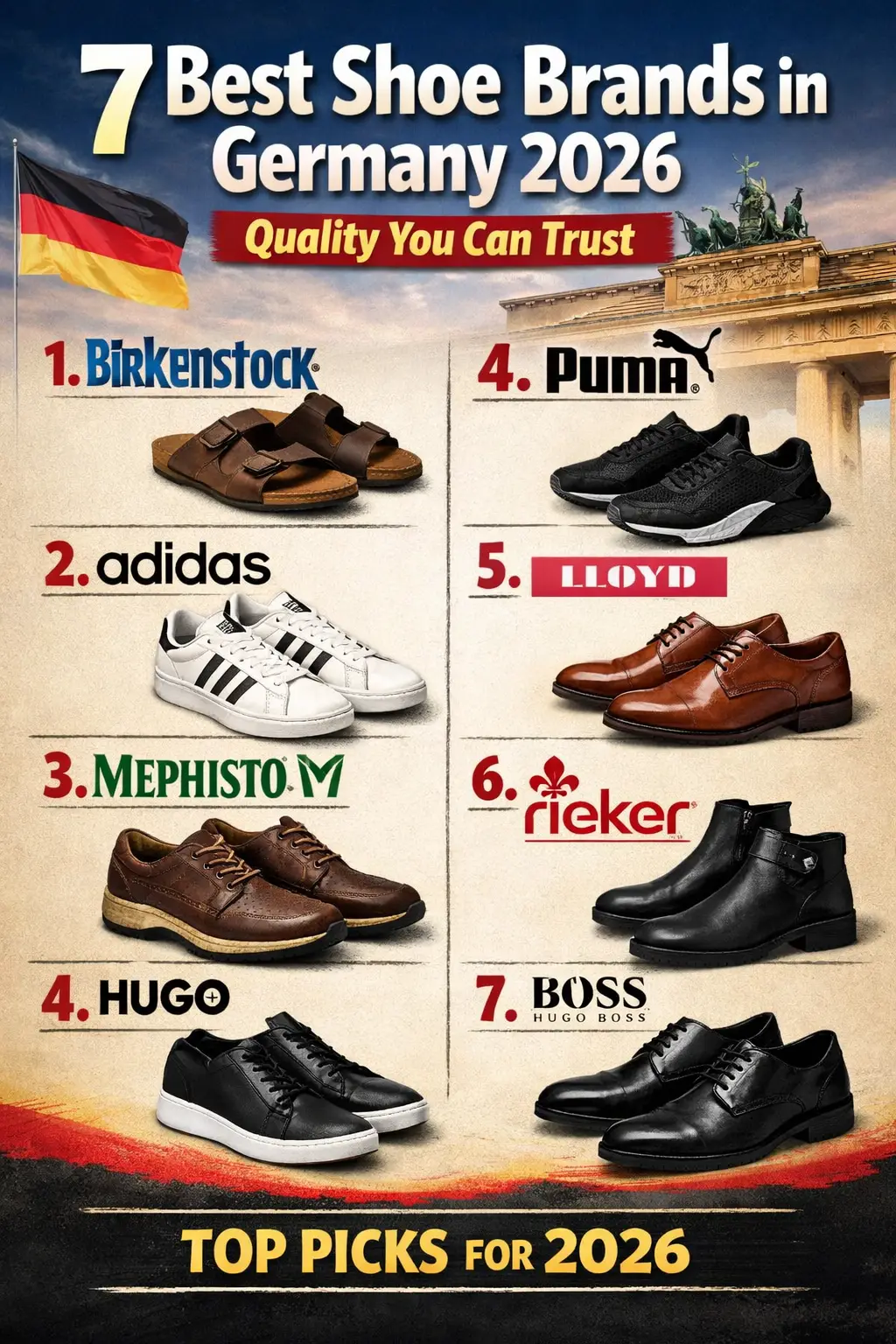
The 7 Best Shoe Brands in Germany, Ranked and Reviewed
1. Adidas — The Global Powerhouse That Started in a Small Bavarian Town
Most people know Adidas. Far fewer know it was founded in 1949 by Adolf Dassler in Herzogenaurach, Bavaria — a small town that also gave birth to Puma (founded by his brother Rudolf). That sibling rivalry actually shaped modern sports footwear in ways that still ripple through the industry today.
Adidas is now one of the two largest sportswear companies in the world, but its German roots are genuine and still influence its design DNA. The three-stripe logo is arguably the most recognized branding element in footwear globally.
Why it matters in 2025: Adidas continues to innovate. The Boost cushioning technology, Stan Smith collabs, and sustainability-forward lines like Parley (made from ocean plastic) show a brand that isn’t coasting on legacy. Their NMD, Ultraboost, and Samba silhouettes are performing across fashion and performance categories simultaneously.
Best for: Athletes, sneakerheads, everyday casual wear, sustainability-conscious buyers.
Honest note: Adidas produces at global scale, so “Made in Germany” is rare on their current lineup. But the design heritage and brand standards are unmistakably German.
2. Puma — Speed, Style, and Street Culture Since 1948
Puma was founded one year before Adidas, by Rudolf Dassler in the same town of Herzogenaurach. The two brands literally shared a river that divided town loyalties for decades — workers at each factory wouldn’t cross bridges to the other side. True story.
Today, Puma is a serious global competitor with a strong identity in both athletic performance and street culture fashion. Collaborations with Rihanna’s Fenty, Scuderia Ferrari, and various NBA athletes have kept Puma culturally relevant in ways that pure performance brands struggle to achieve.
Why it matters: Puma’s RS-X, Suede Classic, and Clyde lines have become collector favorites. They’ve also invested in more sustainable production lines, responding to European market pressure in ways that feel genuine rather than performative.
Best for: Fashion-forward buyers, sports fans, collectors, those wanting a premium alternative to Adidas.
3. Birkenstock — The Orthopaedic Icon That Became a Luxury Symbol
If any brand proves that quality eventually wins the culture, it’s Birkenstock. For decades, these cork-footbed sandals were considered the footwear of hippies and health-conscious retirees. Then something shifted.
Designers started wearing them. Celebrities adopted them. Fashion houses collaborated with them. And in 2023, Birkenstock went public on the New York Stock Exchange — valuing the company at around $8 billion at IPO.
Founded in 1774 — yes, you read that right — Birkenstock has been making footwear in Germany for over 250 years. The contoured cork footbed that molds to the shape of your foot over time isn’t a marketing claim. It’s biomechanically sound design that podiatrists routinely recommend.
Why it matters: Birkenstock’s recent collaborations with Dior, Valentino, and Manolo Blahnik confirmed that the brand had crossed from niche health product to genuine fashion authority. The Arizona, Boston, and Mayari remain bestsellers worldwide.
Best for: Long-term foot health, casual lifestyle wear, luxury fashion followers, anyone who spends long hours on their feet.
Affiliate note: Birkenstock products are widely available through global platforms, and the brand holds consistent resale value — relevant for buyers thinking about long-term investment in footwear.
4. Lloyd — German Dress Shoes That Mean Business
Lloyd isn’t a household name outside Europe, but among professionals who care about quality leather dress footwear, it’s respected and trusted. Based in Bremen, Lloyd has been crafting business shoes since 1888 and remains one of Germany’s most important premium dress shoe manufacturers.
The construction quality is notable. Many Lloyd shoes use traditional Goodyear welt stitching — a method that allows the sole to be replaced rather than the entire shoe discarded. In an era of throwaway fashion, this is genuinely important.
Why it matters: Lloyd sits in a sweet spot between mass-market (think Clarks) and luxury (think Church’s or Crockett & Jones). They offer real leather, proper construction, and European sizing accuracy at a price point that’s reasonable for what you get.
Best for: Office professionals, business travelers, men seeking polished leather footwear with genuine durability.
5. Mephisto — Handcrafted Walking Shoes for People Who Walk Seriously
Mephisto was founded in France but has been manufacturing in Germany for decades and is deeply embedded in the German footwear ecosystem. Their product philosophy is unapologetically practical: every shoe is designed around extended walking comfort.
Their SOFT-AIR technology — a cushioning system developed in-house — is widely praised by physiotherapists and podiatrists. These aren’t fashion shoes. They’re tools for people who walk a lot and need their feet to feel human at the end of the day.
Why it matters: The aging demographics of Europe and North America have created a massive market for comfortable, stylish walking shoes that don’t look like medical equipment. Mephisto has been solving that problem for 50+ years.
Best for: Travelers, older adults, professionals who commute on foot, people with foot conditions.
6. Ara Shoes — Precision Fit for Every Foot Type
Ara is the kind of brand that loyal customers swear by for life. Based in Karlsruhe, Ara specializes in women’s footwear with a particular focus on width options and precision fit — something most global brands completely ignore.
Finding a shoe that actually fits your foot width isn’t trivial. Ara produces in multiple width categories, making them a genuine solution for women who have struggled to find comfortable shoes that don’t sacrifice style.
Why it matters: Ara shoes are made with quality leather uppers and cushioned footbeds, and their European sizing standards are consistent. They’re sold across Germany, Austria, and increasingly in North America and Asia.
Best for: Women seeking precise fit, wide-foot wearers, buyers who prioritize everyday comfort without abandoning aesthetics.
7. Rieker — Antistress Footwear for Real Life
Rieker’s entire brand identity is built around one concept: Antistress. Every design decision — the flexible outsoles, the lightweight construction, the stretch materials — serves the goal of reducing foot strain throughout the day.
Founded in 1874 in the Black Forest region of Germany, Rieker now sells in over 100 countries. Their price point is accessible, making them one of the most practical entry points into quality German footwear.
Why it matters: Rieker consistently delivers good value. Their Antistress line uses specially developed materials that flex with the foot’s natural movement, reducing pressure points that cause fatigue and discomfort.
Best for: Budget-conscious buyers, people on their feet all day, everyday casual and light formal wear.
For broader comparisons of European footwear and consumer goods trends, the resource library at lumechronos.shop covers market data useful for buyers and researchers alike.
How to Choose the Right German Shoe Brand for You
This is where most buying guides fail — they list products without helping you match them to your actual life. Here’s a practical framework:
If you prioritize foot health: Birkenstock, Mephisto, or Rieker. These brands design around ergonomics first.
If you prioritize style and culture: Adidas or Puma. Both deliver on fashion credibility while maintaining athletic function.
If you need professional dress shoes: Lloyd. Full stop.
If fit precision matters: Ara, especially if you’ve struggled with standard widths.
If you want longevity over trend: Lloyd (Goodyear welt construction) or Birkenstock (cork footbed that improves with wear).
One thing most buyers miss: German shoes often require a brief break-in period, particularly leather models. Don’t judge a shoe by the first two wears. The materials are dense and high-quality — they conform to your foot over time in a way that cheap shoes never do.
German Footwear and Sustainability — What’s Actually Happening
Sustainability in footwear is a noisy space full of greenwashing. Germany’s regulatory environment and consumer expectations create real pressure on brands to substantiate their claims.
Adidas’ Parley collaboration — shoes made from ocean plastic — has been independently verified and scaled meaningfully. Birkenstock uses natural cork (a renewable, sustainable material) as a core element of their product. Lloyd and Ara have moved toward certified leather sourcing in recent years.
This doesn’t mean every German shoe is environmentally perfect. But the baseline expectations are higher than in many other markets, and that matters for buyers who care about where their money goes.
For ongoing analysis of European consumer goods sustainability, lumechronos.de provides useful international perspective on market shifts.
German Shoes vs. Italian Shoes vs. American Brands — A Honest Comparison
| Feature | German Brands | Italian Brands | American Brands |
|---|---|---|---|
| Construction quality | Very high | Very high | Varies widely |
| Comfort focus | High | Medium | Medium–High |
| Fashion prestige | Medium–High | Very high | Medium |
| Price range | Mid to premium | Premium to luxury | Budget to premium |
| Sustainability focus | High | Medium | Low–Medium |
| Width options | Good (Ara, Rieker) | Limited | Better than Europe |
| Long-term durability | Very high | High | Varies |
Germany wins on ergonomics, sustainability, and durability. Italy wins on fashion prestige and aesthetics. American brands offer wider size/width availability and more accessible pricing at the lower end.
For everyday wear and long-term value, German brands offer one of the best combinations on the market.
FAQ — Frequently Asked Questions About German Shoe Brands❓
Q1: What are the most famous shoe brands from Germany? The most globally recognized German shoe brands are Adidas and Puma, both founded in Herzogenaurach, Bavaria. Beyond sportswear, Birkenstock, Lloyd, Mephisto, Ara, and Rieker are highly respected in premium and comfort footwear segments. Each brand has a distinct identity and target customer — from high-performance athletes to professionals seeking quality dress shoes.
Q2: Is Adidas actually made in Germany? Adidas was founded in Germany and its headquarters remain in Herzogenaurach. However, the vast majority of production today takes place in Asia to manage global scale and cost efficiency. Limited heritage or collaboration editions are occasionally produced in Germany or Europe. The design, R&D, and brand standards are definitively German.
Q3: Which German shoe brand is best for people with foot problems? Birkenstock and Mephisto are consistently recommended by podiatrists and physiotherapists. Birkenstock’s cork footbed molds to the foot’s natural shape and supports the arch biomechanically. Mephisto’s SOFT-AIR technology provides superior cushioning for extended walking. Rieker’s Antistress technology is a solid budget-friendly alternative for people with mild discomfort.
Q4: Are German shoes worth the higher price? In most cases, yes — particularly for brands like Lloyd (Goodyear welt construction allows resoling), Birkenstock (footbed improves with wear), and Mephisto (built for thousands of miles of walking). The price-per-wear ratio tends to be very favorable compared to cheaper alternatives that need frequent replacement.
Q5: What German shoe brand is best for business wear? Lloyd is the clear answer for business footwear. Based in Bremen, they’ve been making quality leather dress shoes since 1888. Their construction standards, genuine leather materials, and European sizing accuracy make them the go-to choice for professionals in Germany and increasingly across North America and Asia.
Q6: Can I buy German shoe brands internationally? Yes. All seven brands covered in this guide ship internationally or are available through major global retailers. Adidas and Puma are available everywhere. Birkenstock has expanded dramatically post-IPO. Lloyd, Ara, Mephisto, and Rieker are accessible via European e-commerce platforms and increasingly through Amazon and brand-direct websites.
Q7: What makes German shoe brands different from other European brands? The main differentiators are ergonomic engineering, construction durability, and sustainability standards. German brands are particularly strong in foot-health-focused design and in offering width variety (especially Ara and Rieker). Italian brands tend to prioritize aesthetics; German brands prioritize function — and increasingly find ways to deliver both.
Q8: Which German shoe brand is best for sustainable buyers? Adidas (Parley ocean plastic collection), Birkenstock (natural cork, natural leather), and Lloyd (sustainable leather sourcing initiatives) are the strongest options for environmentally conscious buyers. Always check current certification status, as sustainability commitments evolve.
🧾 Key Takeaways
- Germany is home to some of the world’s most respected footwear brands, from global giants like Adidas and Puma to specialist brands like Lloyd and Birkenstock.
- German shoe brands consistently prioritize ergonomic design, making them strong choices for people who value long-term foot health.
- Birkenstock’s cork footbed and Lloyd’s Goodyear welt construction are examples of German engineering logic applied to everyday wearable products.
- Don’t judge German leather shoes on first wear — break-in periods are real and the long-term fit reward is worth it.
- Sustainability is genuinely stronger in German footwear than in most comparable markets, driven by EU regulation and consumer expectations.
- Matching brand to use case matters: Lloyd for business, Birkenstock for health and lifestyle, Adidas/Puma for sport and culture, Ara for fit precision.
- German footwear offers exceptional price-per-wear value at mid to premium price points.
🧠 Conclusion — Why This List Actually Matters
Shoe choices are more consequential than most people admit. Your feet carry you through every single day, and the shoes you wear affect your posture, energy levels, and long-term joint health in ways that compound over years.
German shoe brands have spent generations solving these problems with genuine engineering rigor. Whether you discover Birkenstock through a luxury fashion collaboration, find Rieker because your feet needed relief, or grew up with Adidas as a cultural touchstone — there’s a German footwear brand that fits your life.
The seven brands in this guide aren’t recommendations built around affiliate margins or brand sponsorships. They’re the brands that consistently show up when real buyers, podiatrists, and footwear professionals discuss quality, durability, and value.
Explore the full consumer goods and lifestyle content library at lumechronos.com, browse tools and resources at lumechronos.shop, or get a global market perspective at lumechronos.de.
If you found this useful, share it with someone who’s been stuck between shoe choices — or drop a comment with your own experience with German footwear. Real recommendations from real wearers are always the most valuable.
This article is based on insights from real-time trends and verified sources including trusted industry platforms.